Custom sheet metal manufacturing is the process of designing, cutting, forming, and finishing metal stock into components built to the exact specifications of a single project. Southern California contractors, architects, and property owners rely on this process whenever an off-the-shelf part simply will not fit. In contrast to mass-produced ductwork or panels, custom fabrication accounts for unique dimensions, load requirements, and finish standards from the start. As a result, the finished pieces install faster, perform better, and last longer. This guide breaks down how the process works, which materials matter most, and how to select a qualified fabricator, such as Tinco Sheet Metal, for your next build.
Quick answer: Custom sheet metal manufacturing turns flat metal stock into precision components — brackets, ductwork, flashing, enclosures — shaped to a project’s exact drawings rather than a standard catalog size. Southern California fabricators typically combine CAD design, CNC cutting, forming, and welding to deliver parts that fit the first time.
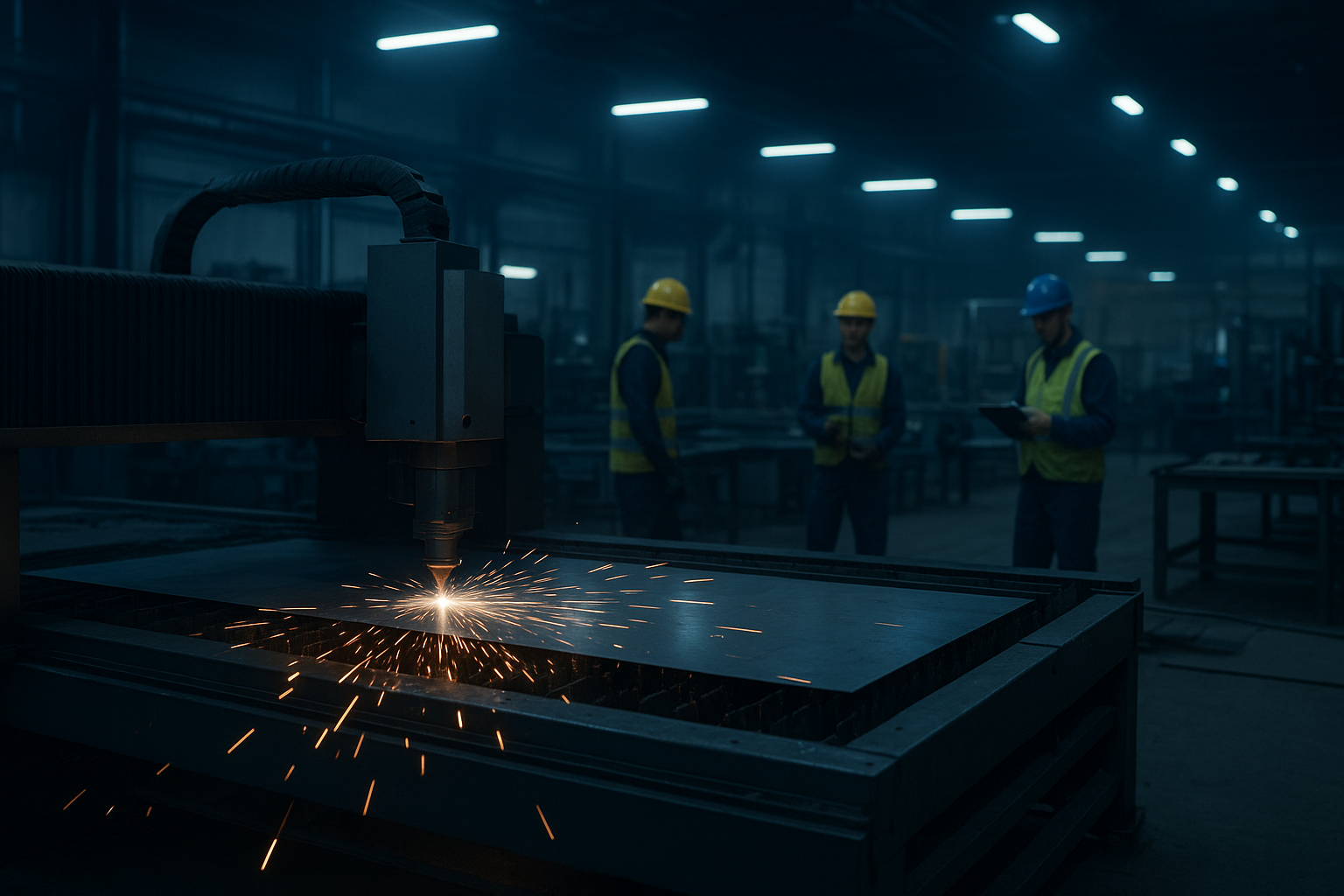
Precision CNC cutting is one of the first steps in custom sheet metal manufacturing.
What Is Custom Sheet Metal Manufacturing?
Custom sheet metal manufacturing covers every step needed to turn raw sheet metal coil or flat stock into a finished part built for one specific application. Specifically, a fabricator reviews project drawings, selects the right gauge and alloy, then cuts, bends, and joins the material until it matches the design. Unlike stock components sold in fixed sizes, custom parts are engineered around the building, machine, or system they will serve.
For example, an HVAC contractor might need a transition duct that fits an odd rooftop curb, or an architect might need a stainless steel wall panel sized to a curved lobby. In both cases, standard products will not work. Therefore, the project moves to a fabrication shop capable of producing one-off or short-run parts to tight tolerances. Learn more about the equipment and techniques involved on the capabilities page of Tinco Sheet Metal, a Southern California fabricator that handles projects at this level of precision.
Why Precision Metal Fabrication Matters in Southern California
Southern California’s mix of commercial, industrial, and architectural construction creates constant demand for precision metal fabrication. Building codes in seismic zones, coastal corrosion concerns, and tight urban footprints all push designers toward custom-built parts rather than generic stock. Consequently, general contractors and property owners often need a fabricator who understands regional code requirements as well as metalworking itself.
In addition, project timelines in this region tend to be aggressive. A fabricator with in-house design, cutting, and forming capability can turn drawings into finished components without waiting on multiple subcontractors. According to the U.S. Bureau of Labor Statistics, sheet metal workers hold well over 130,000 jobs nationwide, reflecting steady, ongoing demand for fabrication expertise across construction and manufacturing.
This matters most on commercial retrofits, hospital expansions, and industrial plant upgrades, where downtime is expensive. Tinco Sheet Metal, for instance, has built its reputation across Southern California by serving architects, general contractors, and property owners with this exact combination of speed and precision. You can review the full scope of services on the services page.
Materials Commonly Used in Custom Sheet Metal Fabrication
Material choice shapes cost, durability, and finish far more than most people expect. Below are the metals fabricators reach for most often on Southern California projects, each governed by established metalworking standards for gauge and tolerance.
- Galvanized steel — cost-effective and corrosion-resistant, common in ductwork and structural panels.
- Stainless steel — used where hygiene or corrosion resistance is critical, such as medical facilities and coastal buildings.
- Aluminum — lightweight and naturally corrosion-resistant, popular for architectural cladding and flashing.
- Copper — chosen for decorative roofing, gutters, and long-term weathering appeal.
Because each metal behaves differently under heat and pressure, the fabricator’s forming and welding methods change with the material. As a result, an experienced shop adjusts tooling and technique per job rather than applying one process to every material.
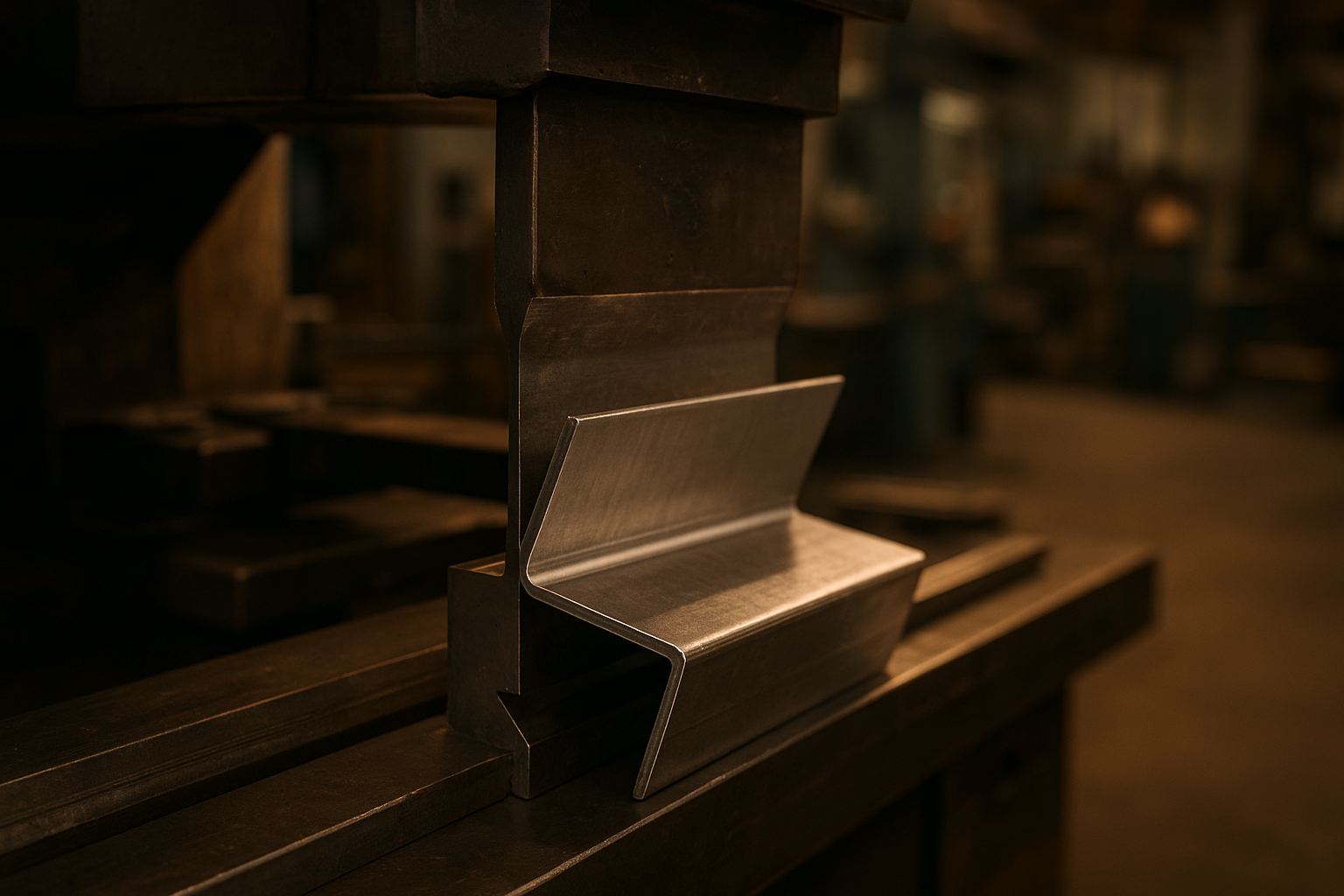
Forming and bending give each custom sheet metal manufacturing project its final shape.
How the Sheet Metal Manufacturing Process Works
Although every project differs, most custom sheet metal manufacturing jobs follow the same general sequence. Below is the typical order of operations.
- Design and engineering review. The fabricator studies architectural or mechanical drawings, confirms dimensions, and selects the correct gauge and alloy for the application.
- Material sourcing. Sheet or coil stock is ordered in the specified metal type and thickness, then inspected for defects before cutting begins.
- CNC cutting or punching. Laser cutters, plasma tables, or turret punches shape flat blanks according to the digital design file.
- Forming and bending. Press brakes and rollers bend the flat blanks into their final three-dimensional shape, following precise angle tolerances.
- Welding and assembly. Technicians join multiple pieces using welding, riveting, or fastening methods suited to the metal and the load the part must carry.
- Finishing and quality control. Parts receive deburring, painting, or coating, then undergo inspection against the original specifications before shipping or installation.
Furthermore, many Southern California fabricators also handle on-site installation, which means the same team that built the part also fits it into place. This reduces miscommunication between fabrication and installation crews.
Choosing a Custom Sheet Metal Manufacturer in SoCal
Not every fabrication shop can handle every project, so it helps to ask a few direct questions before signing a contract. Specifically, find out whether the shop has in-house design and engineering support, what metals and gauges they regularly work with, and whether they can manage both fabrication and installation.
In addition, ask for examples of completed work similar in scale to your project. A shop with decades of experience across commercial, industrial, and architectural sheet metal work — like Tinco Sheet Metal, a longtime Southern California contractor — will usually have documented case studies. For instance, their MedSco project page shows how custom fabrication supports specialized facility requirements. You can also review the company’s background on its company history page before requesting a quote through tincosheetmetal.com.
Applications of Custom Fabricated Metal Components
Custom sheet metal manufacturing touches far more of a building than most people realize. Common applications include:
- HVAC ductwork, transitions, and plenums sized to fit specific mechanical rooms.
- Architectural cladding, parapet caps, and flashing on commercial building exteriors.
- Equipment enclosures and housings for industrial machinery.
- Roofing components including gutters, downspouts, and scuppers.
- Specialized panels for hospitals, laboratories, and cleanrooms requiring strict hygiene standards.
Because these applications span so many industries, general contractors often prefer working with one experienced fabricator across an entire project rather than juggling several specialty vendors.
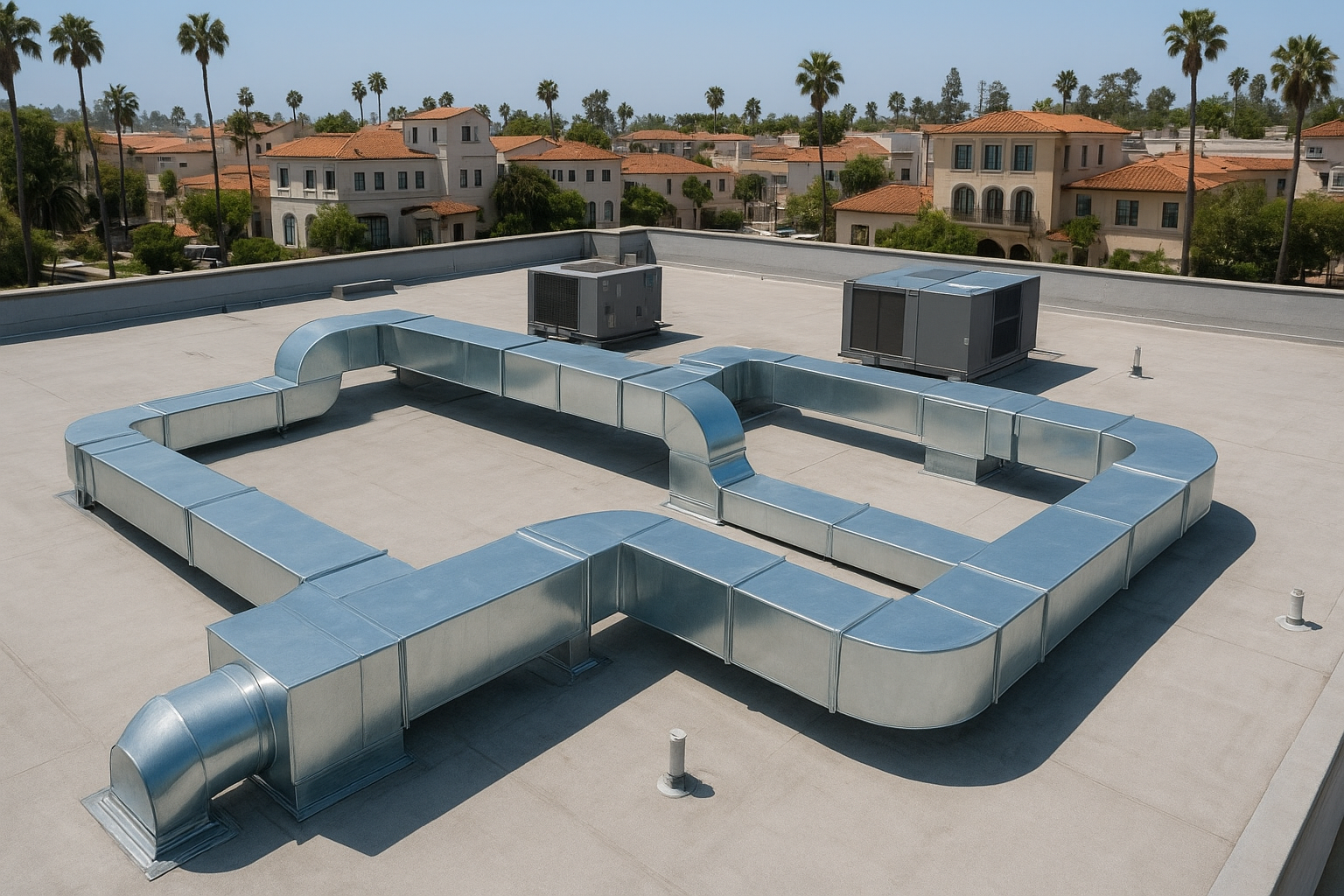
Finished ductwork and flashing show the end result of custom sheet metal manufacturing.
Frequently Asked Questions About Custom Sheet Metal Manufacturing
What is custom sheet metal manufacturing?
Custom sheet metal manufacturing is the process of designing, cutting, forming, and finishing metal stock into parts built for a specific project rather than pulled from stock inventory. It typically includes CAD design, CNC cutting, forming, welding, and finishing steps.
How does custom fabrication differ from standard sheet metal products?
Standard products come in fixed sizes meant for general use, while custom fabrication is engineered around a project’s exact drawings. As a result, custom parts fit unusual dimensions or load requirements that off-the-shelf items cannot.
What materials work best for custom sheet metal manufacturing?
Galvanized steel, stainless steel, aluminum, and copper are the most common choices for custom sheet metal manufacturing. The right material depends on corrosion exposure, load, and whether appearance matters as much as performance.
How long does a typical custom sheet metal manufacturing project take?
Simple parts can be cut and formed within a few days, while large architectural or industrial projects may take several weeks from design approval to installation. Material availability and design complexity are the biggest factors.
How much does custom sheet metal manufacturing cost?
Cost varies with material type, thickness, part complexity, and order volume, so most fabricators quote each custom sheet metal manufacturing project individually. Sharing detailed drawings early is the fastest way to get an accurate estimate.
What industries rely on custom sheet metal manufacturing?
Commercial construction, industrial manufacturing, healthcare facilities, and architectural design all depend on custom fabrication. Each industry has different tolerance, hygiene, or code requirements that standard products rarely meet.
What equipment do fabricators use in the process?
Common equipment includes CNC laser cutters, plasma tables, turret punches, press brakes, and welding stations. Together, these machines move flat metal stock into a finished, three-dimensional part.
What mistakes should I avoid when ordering custom sheet metal parts?
One common mistake is submitting incomplete drawings, which causes delays once fabrication starts. Another is choosing the cheapest quote without confirming the shop’s experience with the required material and tolerance.
Why should I hire a local Southern California fabricator?
A local fabricator understands regional building codes, seismic requirements, and coastal corrosion factors that affect material choice. Proximity also tends to shorten lead times and simplify site visits during installation.
What finishes are available for custom sheet metal components?
Options typically include mill finish, painted or powder-coated surfaces, anodized aluminum, and polished stainless steel. The best finish depends on exposure conditions and whether appearance is a priority.
How do I request a quote for a custom sheet metal manufacturing project?
Most fabricators ask for project drawings, material preferences, and quantities before providing a quote. Contacting the shop directly, such as through tincosheetmetal.com, is usually the fastest way to start.
What is the difference between welding and forming in sheet metal fabrication?
Forming shapes a single piece of metal using bending or rolling, while welding joins two or more separate pieces together using heat. Most custom projects use both techniques at different production stages.
Final Thoughts on Custom Sheet Metal Manufacturing
Custom sheet metal manufacturing gives Southern California contractors, architects, and property owners a way to solve fit and performance problems that standard products simply cannot address. From material selection through cutting, forming, welding, and finishing, each step shapes how well the final part performs on site. Therefore, choosing a fabricator with proven regional experience — one capable of handling design, production, and installation under one roof — reduces risk and keeps projects on schedule. Whether the job involves HVAC ductwork, architectural panels, or industrial enclosures, working with an established shop like Tinco Sheet Metal helps ensure the finished components meet both code requirements and design intent.